

Our research projects focus on translational aspects of the immune response in cancer and infectious diseases to identify novel mechanistic insights and potentially druggable immune mechanisms that are relevant in the development of immunotherapies and vaccination strategies.
The three major lines of research are:
- Development of therapeutic antibodies against SARS-Cov-2: production of human monoclonal antibodies neutralizing SARS-CoV-2 from B lymphocytes of recovered or vaccinated individuals. Functional streamlining of the Fc portion of human immunoglobulin to improve antibody-dependent cytotoxicity.
- Immunology of liver cancers: i) Investigation of immune mechanisms mediated by newly developed therapeutic antibodies and bioproducts; ii) Analysis of the role of the tumor microenvironment and lipidome in modulating immune responses; iii) In-depth characterization of antitumor immune responses in patients undergoing standard therapies; iv) Single-cell transcriptomic profiling of liver infiltrating lymphocytes and macrophages.
- Nasal Immunity in immunocompromised patients: characterization of immune cells residing in the nasal cavity to guide the design of innovative and targeted vaccination strategies.
- Dei Cas M, Mantovani S, Oliviero B, et al. Cholangiocarcinoma cells direct fatty acids to support membrane synthesis and modulate macrophage phenotype. Hepatol Commun. 2025;9(6):e0717. Published 2025 May 23.
- Oliviero B, Dei Cas M, Zulueta A, et al. Ceramide present in cholangiocarcinoma-derived extracellular vesicle induces a pro-inflammatory state in monocytes. Sci Rep. 2023;13(1):7766. Published 2023 May 12.
- Oliviero B, Varchetta S, Mele D, et al. MICA/B-targeted antibody promotes NK cell-driven tumor immunity in patients with intrahepatic cholangiocarcinoma. Oncoimmunology. 2022;11(1):2035919. Published 2022 Feb 21.
- Mantovani S, Daga S, Fallerini C, et al. Rare variants in Toll-like receptor 7 results in functional impairment and downregulation of cytokine-mediated signaling in COVID-19 patients. Genes Immun. 2022;23(1):51-56.
- Mantovani S, Oliviero B, Lombardi A, et al. Deficient Natural Killer Cell NKp30-Mediated Function and Altered NCR3 Splice Variants in Hepatocellular Carcinoma. Hepatology. 2019;69(3):1165-1179.
- Single-cell sequencing system,
- Multi-color flow cytometry,
- Droplet digital PCR,
- Complete PCR equipment,
- Imaging system,
- Western blot,
- ELISPOT and ELISA equipment,
- Cell culture facilities.
- Ministero della Salute-Piano Operativo della Salute, POS, traiettoria 4 ‘Immunoterapia: cura e prevenzione di malattie infettive e tumorali (Immuno-HUB)’.
- Next Generation EU-MUR PNRR Extended Partnership initiative on Emerging Infectious Diseases (INF-ACT);
- PRIN: PROGETTI DI RICERCA DI RILEVANTE INTERESSE NAZIONALE – Bando 2022 “A Multipronged Approach to Immunotherapy of Liver cancer (MAIL)”;
- PRIN: PROGETTI DI RICERCA DI RILEVANTE INTERESSE NAZIONALE – Bando 2022 “Muscle weakness and exercise (in)tolerance in Long-COVID patients: mechanistic bases and predictive biomarkers”.
- Anna Caretti (University of Milan)
- Marco Terreni, Federico Forneris, Claudia Scotti and Cristian Turato (University of Pavia)
- Annalisa Chiocchetti (Università degli Studi del Piemonte Orientale, Novara)
- Alessandra Renieri (University of Siena)
- Antonio Bertoletti (Duke-NUS Medical School, Singapore, Singapore).
GROUP MEMBERS:
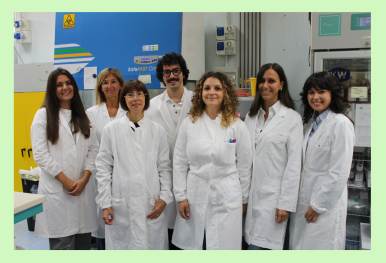
Barbara Oliviero, Sabrina Ottolini, Gaia Donetti, Antonino Samuele Iraci, Alessia La Gaipa, Daniela Conteianni.
Ultimo aggiornamento: 15/10/2025